
How does Melinda approach strategy?
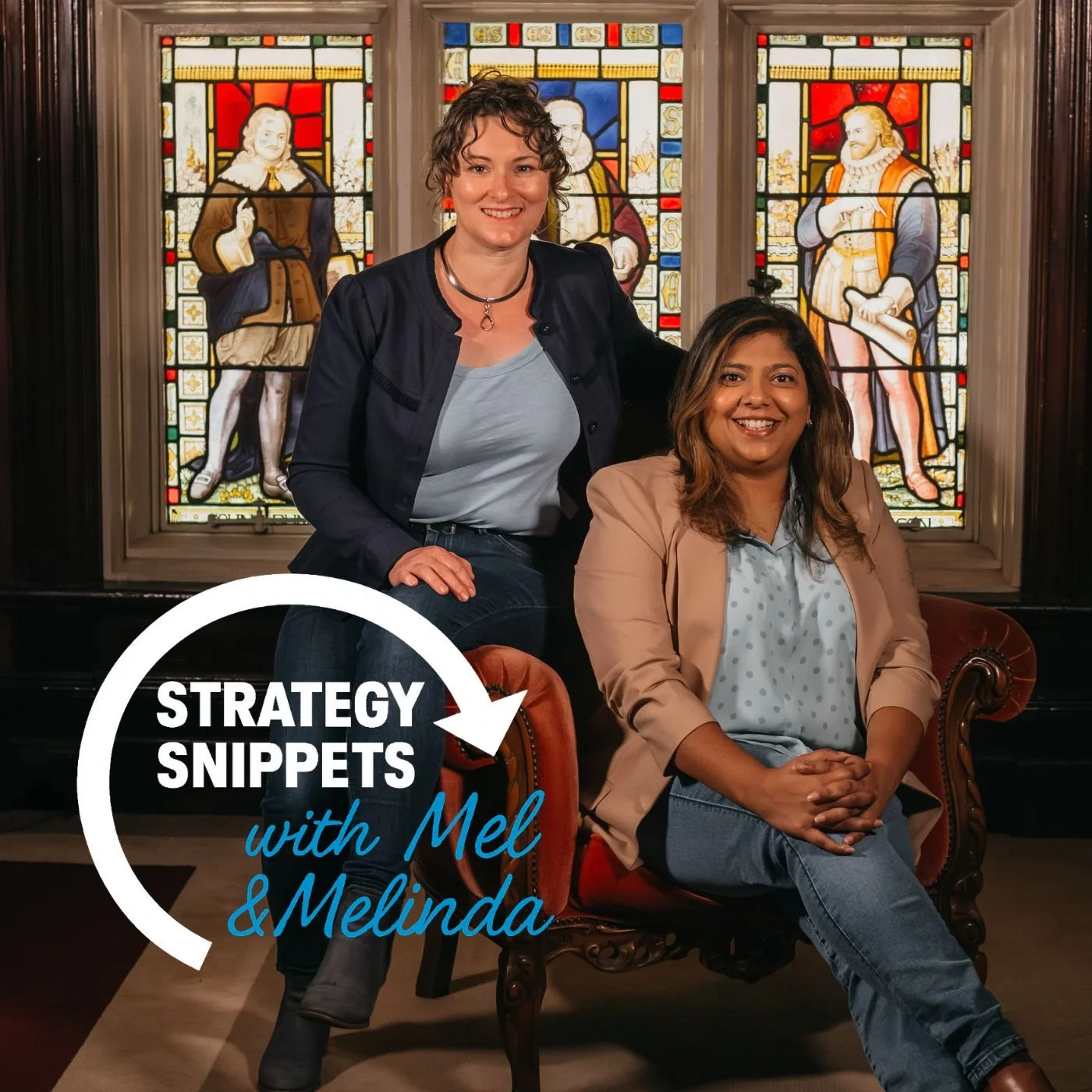
Strategy Snippets · Season 1 · Episode 1
[00:00–00:45] Introduction
Mel:
Hey there. I’m Mel.
Melinda:
And I’m Melinda.
Mel:
And this is Strategy Snippets.
Melinda, what is your approach to strategy?
[00:45–02:15] Strategy Grounded in Values and Honesty
Melinda:
My approach to strategy has three key foundations.
First, I intentionally embed biblical values into strategy — particularly loving God and loving people. While strategy can be task-oriented, those values must shape how a strategy is designed and implemented.
Second, good strategy requires investigating reality honestly and without fear. If information is hidden or avoided, the strategy is likely to fail. Strategy depends on clearly seeing what is actually happening, even when that is uncomfortable.
Third, clarity of goals is essential. If the goal is unclear or poorly defined, it is very easy to build a strategy that delivers outcomes nobody truly wanted.
[02:15–03:45] Strategy as Contextual and Servant-Led
Melinda:
For me, strategy always needs to align with the ethos we see in Scripture — how God calls people to live and work together. That means strategy must be contextual. It must fit the people involved, how they are wired, and what God has placed on their hearts.
Strategy is not one-size-fits-all. Treating people as individuals and drawing out their strengths is a form of servant leadership. Good strategy honours people rather than forcing them into generic solutions.
Understanding cultural realities, relational dynamics, and available resources is essential before attempting change.
[03:45–04:45] Adapting to Change and Using Methodologies Wisely
Melinda:
One of the things I enjoy about strategy is that it is never static. Culture shifts over time, so strategies need to allow for change and be adjusted as circumstances evolve.
Methodologies can be helpful, but they should not become rigid frameworks that restrict thinking. Learning from what has worked elsewhere is valuable, but strategies must always be adapted to fit the local context.
[04:45–06:30] The Danger of Copy-and-Paste Strategies
Mel:
This sounds like what happens when leaders attend a conference, hear about a successful program, and try to implement it unchanged in their own context.
Melinda:
Exactly. While there is always something to learn from others, copying a strategy without considering cultural, relational, and contextual differences often leads to failure.
Even organisations in nearby locations can be vastly different. People, culture, geography, and expectations all affect how a strategy works. Assuming the same approach will work everywhere ignores these realities.
[06:30–08:15] Cultural Awareness and Discernment
Melinda:
Cultural awareness is critical. What works in one cultural context may not work in another. Even the way questions are asked needs to be adapted to the people involved.
In Christian contexts, discernment matters. The Holy Spirit may want to do something similar to what has worked elsewhere — or something quite different. Strategy should leave room for that.
[08:15–09:15] The Frustration of Ignoring Internal Strategists
Melinda:
For strategists, it is deeply frustrating when organisations rely entirely on external ideas while ignoring people who understand the organisation from the inside.
Internal strategists have lived experience of the culture, values, and people. They care deeply about the outcomes. Sustainable change rarely comes from quick fixes imported from elsewhere.
If you have strategists within your organisation, involve them early rather than searching for external shortcuts.
[09:15–10:45] Valuing Perspectives and Managing Change Well
Melinda:
Another key part of my approach is valuing a wide range of perspectives. Strategy benefits from hearing many viewpoints, even when not everyone agrees.
Listening helps leaders understand concerns and improves how change is communicated and implemented. A consultative approach builds engagement, even when decisions ultimately move in a different direction.
Good change management acknowledges discomfort without abandoning the direction of travel. People need to feel heard in order to move forward together.
[10:45–End] Closing Reflection
Melinda:
Strategy works best when it is values-led, honest, contextual, and people-centred. When those elements are present, strategy becomes a powerful tool for meaningful and sustainable change.